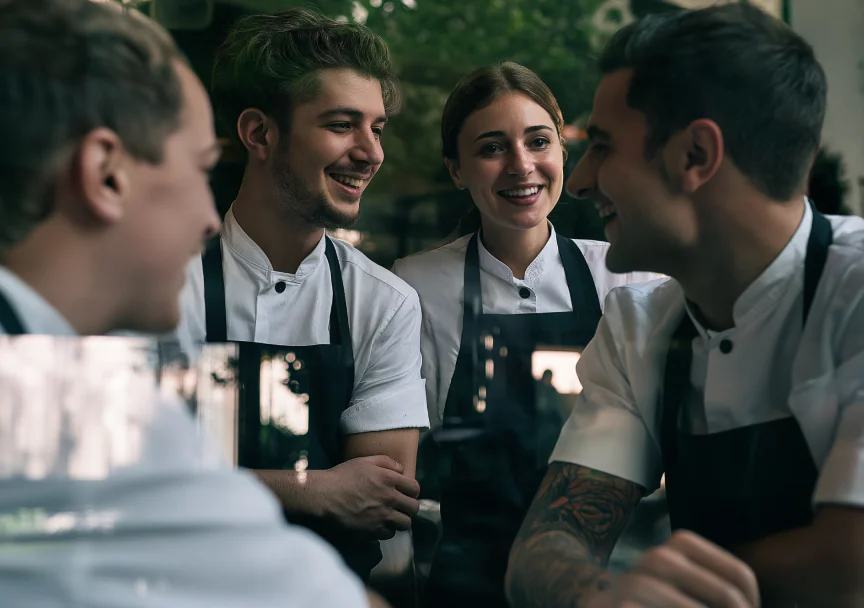
Building confident hospitality teams starts with understanding what employees need, providing relevant learning and giving them opportunities to practise. Delivering this consistently across different roles, languages and sites takes time and resources.
AI tools can help make that process more efficient, from analysing employee feedback to creating multilingual training and enabling realistic roleplay. In this blog, we explore how these tools can help you build more confident hospitality teams, equipped to put their learning into practice at work.
Understanding what teams need
Employees won’t all need the same training to feel confident in their roles. A new starter may be unsure about everyday procedures, while an experienced team member might need help handling difficult guest conversations. Across multiple sites, these differences can be harder to spot, particularly when completion rates alone don’t show which tasks or situations employees still lack confidence in.
Employee feedback can help reveal what’s working, where knowledge gaps remain and which situations teams feel least prepared for. However, creating surveys and making sense of responses across a business takes time, that can make it difficult to gather and act on feedback regularly.
Flow Learning’s AI-powered survey creation and cross-business analysis can make this process more efficient, helping you to:
- Gather focused feedback: Create surveys to understand how employees feel about their training, which areas they find challenging and where they would welcome further development.
- Identify shared learning needs: Explore feedback across the business to spot recurring themes, such as uncertainty around new procedures or a lack of confidence handling complaints
- Understand differences between teams and sites: Look beyond the overall picture to identify where particular sites or groups may need a more focused approach.
With a clearer understanding of these needs, you can prioritise learning that addresses the situations employees find difficult.

Making relevant learning easier to deliver
Once you understand where development is needed, the next step is providing learning that reflects employees’ roles and the situations they face. Generic content won’t always capture your procedures, service standards or ways of working, while producing bespoke training across different sites and languages can require considerable time and resources.
Mapal Studio, our AI-powered content creation tool, makes developing engaging, on-brand learning faster and more manageable, helping you to:
- Reduce development time: Speed up the process of turning your knowledge and materials into learning content, freeing up time for other training priorities.
- Tailor training to your business: Develop bespoke courses that reflect your brand, procedures and service standards, giving employees guidance that relates directly to their work.
- Keep pace with change: Respond more quickly to new business needs, changing industry requirements and updated standards, so training stays relevant as expectations evolve.
- Adapt content for different languages: Create multilingual courses so employees across your teams can learn in a language they understand confidently.
Building confidence through practice
Knowing what to do and feeling confident doing it are different things. An employee might understand your complaints procedure but still feel unsure when faced with an upset guest, while a new manager may know the principles of giving feedback without feeling ready to lead a difficult conversation.
Providing opportunities to rehearse can help close this gap, but arranging roleplay sessions takes time and depends on people being available together. Across busy teams and different shift patterns, regular practice can be difficult to organise.
Mapal RealPlay, our AI-powered roleplay tool, gives employees space to practise realistic and bespoke workplace conversations, helping them to:
- Prepare for challenging situations: Rehearse conversations they may encounter in their roles, from handling guest complaints to discussing performance with a team member.
- Try different approaches: Explore how their choice of words and responses can influence a conversation, without the pressure of getting it right with a guest or colleague.
- Learn from feedback: Understand what went well and where they could improve, with opportunities to practise again and refine their approach.
Making practice more accessible gives employees time to develop their skills before they need them during service. When a challenging conversation arises, they have experience to draw on, helping them respond with more confidence.

Final thoughts
Building more confident hospitality teams means making learning relevant, accessible and practical. AI tools can help by making it easier to understand development needs, create tailored training and give employees opportunities to practise.
With AI-powered tools built into Flow Learning, including Mapal Studio and RealPlay, you can deliver these experiences more efficiently, helping teams feel better prepared for the situations they face at work.
Explore how Flow Learning can help you build more confident teams.